
Choosing three exciting goals is the part of strategy that feels like strategy. It's energizing, and it's over in an afternoon. The work that actually produces results is the plan: milestones, owners, dates, a review already on the calendar, and the list of things you're giving up to make room. WOW needs somebody to build the path to it, and that path is a document with names and dates on it.
Picking goals is the easy part of strategy.
It's the thing that feels like strategy, which is why most teams stop there. You get everyone in a room, you argue productively for a few hours, you land on three things that matter, and everyone leaves energized.
I've run this meeting many times. I've also seen what usually happens next.
Which is usually next to nothing.
The goals were great. We just never built the plan to accomplish them.
WOW needs HOW
WOW is the future. Purpose, mission, and even the goals themselves. WOW is what makes somebody lean forward in a meeting.
HOW is the path. Milestones, owners, dates, and the work that happens between now and then.
Every organization needs both.
Teams that run on WOW alone produce a beautiful list every January but never move on it. They are optimistic, even naively, about the future.
Teams that run on HOW alone are stable, on time, and well organized. But many times, they just excel at organizing the ordinary, like a well timed train that leaves the station to nowhere.
It's not like leaders stop at WOW and don't get to HOW because they are lazy. Sometimes, it's because they aren't wired to think in steps. WOW leaders are good at seeing the future and making decisions, but they need to bring along some HOW people to help them get there.
So in those meetings, once you lock in on a goal, bring some of those execution questions to the forefront. Be willing to entertain and answer questions like:
- Who is going to run this?
- What is that going to cost?
- How does that fit with what we already committed to in the fall?
The plan is where a goal becomes somebody's job
As a visionary leader, for years I protected the WOW and skipped the HOW, and just called the whole thing planning.
But a goal starts moving when somebody decides where and when they will work on it.
Peter Gollwitzer and Paschal Sheeran found this across ninety-four independent tests of what researchers call implementation intentions. People who wrote down the when and the where were substantially more likely to reach their goals than people who held the goal alone.
That research looked at individuals. I've watched the same thing happen inside organizations. Commitment turns into action when the next move is specific and somebody's name is on it.
I think about how they built the Empire State Building.
John Raskob of General Motors set out to put up the tallest building in the world, which is about as pure a WOW as you'll ever find. What made it real was that Starrett Brothers and Eken showed up with a chart that scheduled every activity on the site against a calendar. They laid a small railway across each floor to move brick, because ten million bricks moved by wheelbarrow doesn't fit inside a schedule. They started building the lower floors before anyone had finished designing the upper ones.
Four and a half stories a week. 410 days, finished ahead of schedule. When's the last time you saw a construction project finish on time and on budget?
They had a goal. They also had a plan detailed enough to schedule the bricks.
Here is what a plan needs before I'll call it a plan:
- Milestones with dates attached. Not the twelve-month outcome. The three or four checkpoints between here and there, each with a date next to it.
- One name per milestone. Other people help. One person answers for it. If two people own it, nobody owns it.
- A first step small enough to start this week. If the first action on your plan takes a month to begin, the plan won't survive the month.
- A number you can see before the end. Something that tells you in week six whether this is working, instead of finding out in week fifty.
- A review already on the calendar. Decide now when you'll sit down together, look at progress, surface what's stuck, and change the route. A plan nobody revisits turns back into a document.
Skip that translation and the priorities never leave the leadership team. Donald Sull and his colleagues, studying strategy execution across hundreds of companies for Harvard Business Review in 2015, found that only half of middle managers could name any of their company's top five priorities.
I don't read that as disengagement. I read it as priorities that never got turned into anybody's actual work.
A real plan says what you are NOT doing
Three goals are only real if something came off the list to make room for them. Otherwise you've added three priorities to a team already at capacity, and the new work loses to the existing work every time, because the existing work has meetings attached to it and the new work doesn't.
We're not naturally good at this. Researchers at the University of Virginia ran eight experiments on how people improve things and published the results in Nature in 2021. When people are asked to make something better, they add components far more often than they remove them, even when removing is easier and works better. Subtraction doesn't show up as an option unless somebody puts it there.
So put it there. At the end of every planning session, ask the question out loud and make somebody answer it.
What are we stopping so this can happen?
You already know what the answers tend to be. A program that made sense four years ago. A report nobody reads. A monthly meeting that survives on momentum. A service line that generates just enough revenue to be hard to kill. A ministry that three people love and nobody attends.
Cutting those is not a failure of loyalty. It's the only honest way to say a goal matters more than the things it's competing with.
When results fall behind, look at the plan first
Sooner or later a goal falls behind. The reflex is to lower the goal. Check the plan first.
The goal was your best thinking about what the organization needed. The plan was your best guess about how to get there, written before you knew anything you've learned since. Look at the route, the resources, the owner, and the assumptions sitting underneath it. Sometimes the goal really was built on a bad assumption and it does need to move. It just shouldn't be the first lever you pull.
The same Harvard Business Review research found a second damaging belief, that good execution means sticking to the plan. Conditions move. The teams that execute well are the ones willing to redeploy resources and rewrite the route while the destination still makes sense.
This is what the scheduled review is for. You can't fix a route you never look at.
Where to go from here
Take your most important goal, the one you'd hate to miss.
Build the next three milestones with the person who will own each one, and put a date on each. Agree together on what comes off the calendar to make room. Put the first review on the calendar before anybody leaves the room. Then tell everyone the plan touches.
That's an hour of work. It's also the hour that separates a goal you talked about from a goal you'll hit.
If you stopped at the goals, you're in good company, and you weren't being lazy. You finished the part of the work that felt like the work, and everyone around you clapped when you did. The plan is the part nobody claps for. It's also the part your team is quietly waiting on, because they can't act on a destination. They can only act on a next step with their name on it.
Give them the next step.
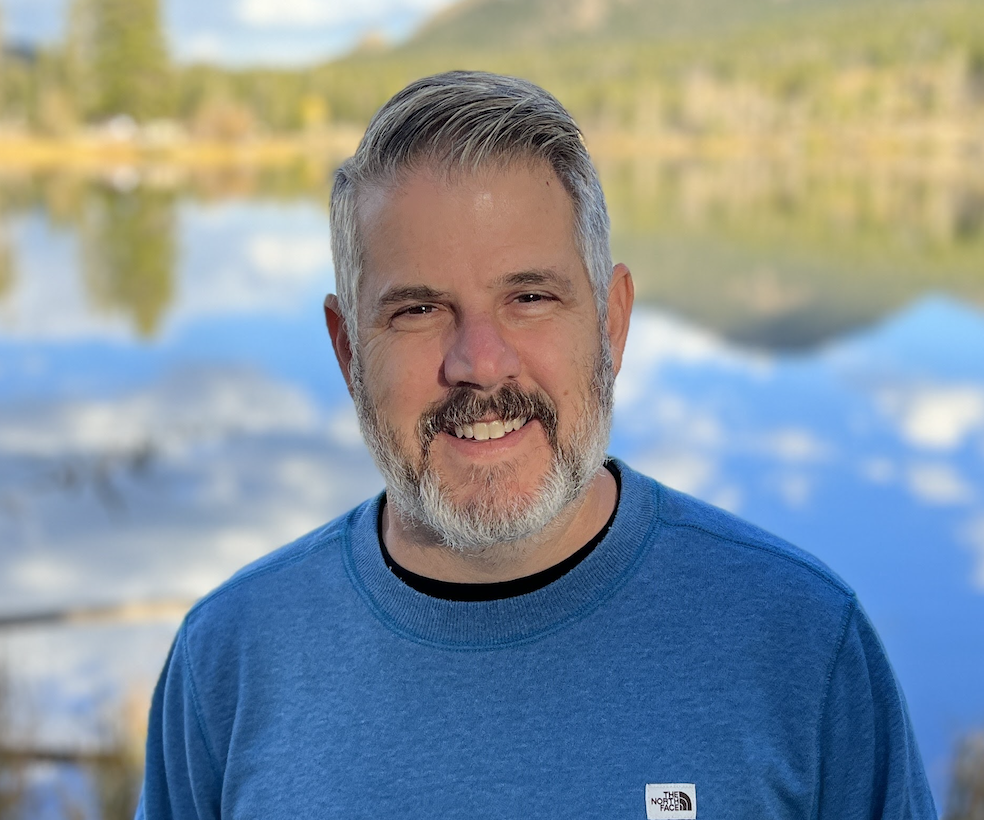
Michael Lukaszewski
Michael is the founder of Alignify. He writes about goals, planning, and helping teams stay aligned on what matters most.